


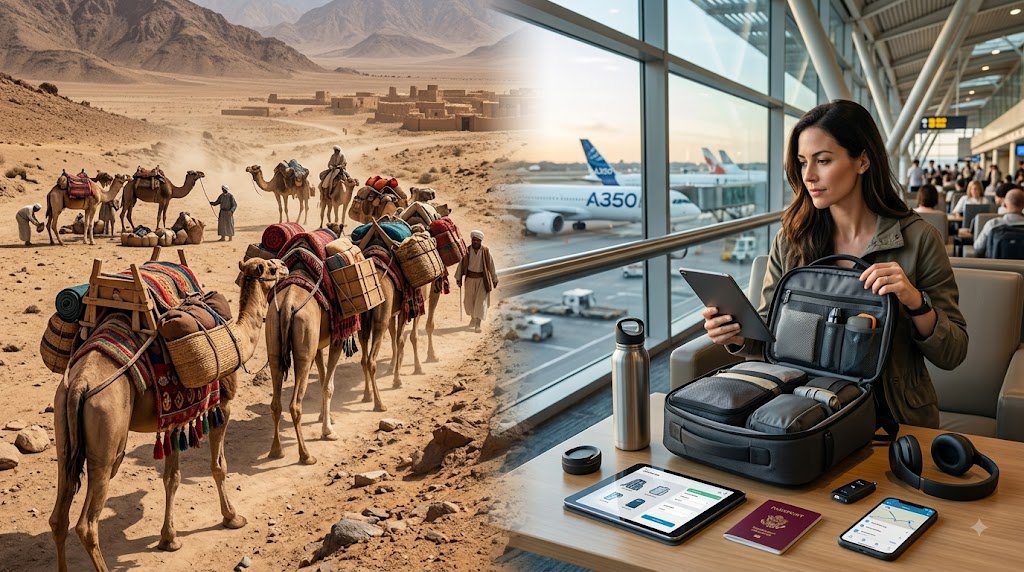
If you think packing for a two-week trip in a single overhead carry-on is a modern stress test invented by budget airlines, think again. Long before automated baggage handling systems or vacuum compression sacks existed, ancient merchants were already mastering the delicate art of spatial geometry and weight distribution across vast, unforgiving deserts.
Fast forward to 2026, and an intriguing renaissance is sweeping the global travel community. Modern jetsetters, digital nomads, and minimalist backpackers are turning away from overpriced gadgetry and returning to the foundational logistics of ancient trade caravans. As travelers demand frictionless journeys, the wisdom of the Silk Road is proving surprisingly relevant for today’s high-tech transit.
Centuries ago, packing a camel or mule wasn’t merely about cramming items into a leather sack; it was a matter of life and death. A poorly balanced pack could injure a pack animal, throw off an expedition’s pace, or cause fragile spices and ceramics to shatter across the dunes. To prevent catastrophe, ancient traders developed systematic packing frameworks built on balance, modularity, and rapid accessibility.
The primary principle resurrected by 2026 travelers is the rule of equalized center-of-gravity loading. Ancient caravan leaders strictly placed the heaviest goods—such as metals, dense textiles, and water vessels—directly against the animal’s spine, low and centered. Light, bulky items like fleece or straw were layered on the outer perimeter to absorb external shocks.
Today’s ergonomic backpackers are adopting this exact architecture to eliminate shoulder strain and fatigue. Modern travelers are placing heavy laptop chargers, cameras, and extra footwear along the back panel closest to their spine, surrounding them with rolled garments. The result is a lighter feel, superior posture, and smooth navigation through crowded airport terminals.
Before nylon packing cubes conquered travel vlogs, ancient merchants relied on “saddled bundling” using woven linen and oilcloths. Rather than throwing loose items together, goods were wrapped into tight, color-coded cloth rolls that protected contents from dust while creating uniform, stackable bricks. These bundles were bound tightly with leather straps to eliminate internal shift during rough transit.
Modern travelers in 2026 are refining this habit into smart, multi-purpose packing wraps. By using lightweight microfiber towels or versatile scarves to tightly wrap outfit sets into self-contained “caravan bundles,” travelers protect delicate electronics while creating seamless modular blocks inside their luggage. It turns out that ancient cloth wrapping outperforms plastic cubes when maximizing awkward luggage corners.
Caravan merchants couldn’t afford to unpack their entire load just to reach a single water skin or medical kit at noon. Everything had a designated priority zone based on daily routines. This principle of “frequency-of-access mapping” is revolutionizing how minimalist travelers pack their daypacks today.
Ancient traders organized packs into three distinct zones: emergency items on top, daily essentials in side pouches, and overnight gear buried deep at the bottom. Applied to 2026 travel, this eliminates chaotic luggage rummaging at airport security lines and train platforms. Every item has an intuitive home based on when and where it will be needed next.
Furthermore, ancient caravan packers were masters of multi-functional utility, adhering to the strict ethos that every carried item must serve at least three distinct purposes. A wool cloak served as rain protection, a blanket at night, and a padded buffer for delicate trade goods during transit. In an era where modern airlines enforce strict weight limits, this ancient mindset is saving travelers hundreds in baggage fees.
Today’s smart travelers are ruthlessly paring down their gear, choosing versatile wardrobe pieces and multi-use tech accessories that mirror ancient utility. A single high-wattage GaN charger replaces four bulky power bricks, while merino wool garments double as technical hiking layers and polished dinner attire. By eliminating single-use travel gadgets, passengers effortlessly achieve the coveted single-bag lifestyle.
The harsh environments of historical trade routes required relentless protection against sand, moisture, and extreme temperature swings. Merchants treated canvas bags with beeswax and animal fats to create natural weather barriers. In 2026, while materials have evolved to waxed canvas and TPU coatings, the core philosophy of rugged environmental shielding remains identical.
Modern commuters and long-term travelers are moving away from flimsy, fast-fashion luggage in favor of heavy-duty, weather-resistant materials inspired by vintage trade gear. Protective dry-sacks and waxed fabric liners are becoming staple internal dividers, safeguarding sensitive laptops and passport documents against unexpected monsoon downpours or transit spills just as beeswax protected ancient silk scrolls.
Even the mental approach to travel preparation in 2026 draws inspiration from historic trade missions. Caravan leaders conducted meticulous pre-departure audits, weighing every bundle on balances before setting off across the wilderness. Modern travelers are adopting pre-trip test runs, packing their bags 48 hours early to walk around their neighborhood, ensuring complete physical comfort before arriving at the departure gate.
It turns out that human movement across the globe hasn’t changed as much as our smartphones might suggest. Whether navigating the dusty trails of 6th-century Persia or rushing through a busy international airport transit hall in 2026, the laws of physics and human endurance remain completely unchanged. Good packing will always be rooted in balance, efficiency, and intentionality.
As we continue to travel faster and farther than ever before, looking backward provides surprisingly fresh forward-thinking solutions. By embracing the brilliant packing logistics developed by ancient caravan masters over thousands of years, modern wanderers can shed unnecessary baggage weight, stress less, and focus on the true essence of the journey ahead.