

METRO BUNDARAN — When travelers dream of the Himalayan kingdom of Bhutan, a single iconic image almost always springs to mind. Perched precariously on a cliffside nine hundred meters above the Paro Valley sits Paro Taktsang, famously known as the Tiger’s Nest. It is breathtaking, magical, and deservedly world-renowned. Yet, focusing solely on this famous landmark is like reading only the cover of an extraordinary, ancient book.
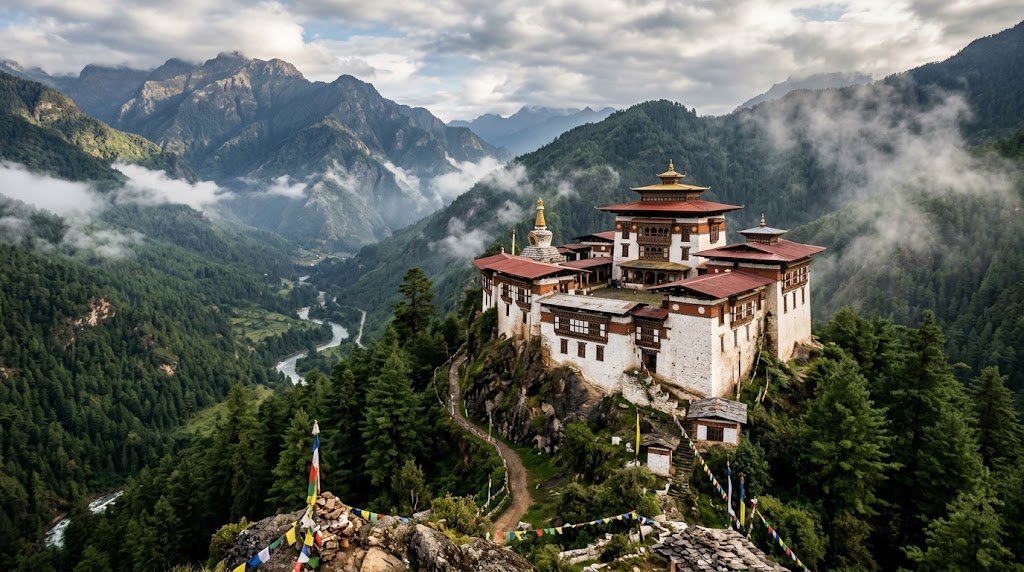
Beyond the steady stream of camera-toting visitors at Paro Taktsang lies a vast network of lesser-known sanctuaries. Deep within dense pine forests, atop mist-shrouded peaks, and along remote eastern river valleys, Bhutan’s true spiritual heartbeat resonates. These forgotten sanctuaries offer a rare glimpse into a timeless way of life, untouched by the modern world.
Traveling through these quiet spiritual havens reveals an intimate perspective on Himalayan Buddhism. Away from the main tourist routes, the ambient sounds shift dramatically. Instead of camera shutters clicking, you hear the steady hum of morning chants, the creak of wooden prayer wheels, and the whisper of mountain breezes.
Consider Chagri Monastery, also known as Cheri Monastery, tucked away at the northern end of the Thimphu Valley. Established in 1619 by Zhabdrung Ngawang Namgyal, the unifier of Bhutan, this sacred site sits atop a steep, wooded hill. Reaching it requires a scenic forty-five-minute hike across a traditional covered wooden bridge and up a winding, tree-lined path.
As you ascend toward Chagri, wild blue sheep often graze peacefully along the rocky outcrops, completely unbothered by human presence. The monastery itself serves as a major retreat center for monks undertaking the strict three-year, three-month meditation track. The air here feels thick with centuries of quiet contemplation, offering visitors a profound sense of inner calm.
Farther east lies the serene Phobjikha Valley, home to the magnificent Gangtey Goempa. While not entirely unknown, this seventeenth-century monastery remains far off the fast-paced tourist track. Perched gracefully on a forested hill overlooking a vast glacial valley, Gangtey offers an extraordinary blend of natural beauty and spiritual heritage.
Every winter, the valley becomes the sanctuary for endangered black-necked cranes migrating from Tibetan plateaus. Local legends tell of these sacred birds circling the monastery three times upon arrival and departure, a natural phenomenon that feels like a deliberate act of reverence. Visiting Gangtey during these quieter months reveals a side of Bhutan where nature and spirituality intermix seamlessly.
For those willing to journey even deeper into the country’s rugged interior, Lhuentse Dzong in northeastern Bhutan presents an extraordinary reward. Perched high above the rushing Kuri Chhu River, this dramatic fortress-monastery stands as one of the most remote strongholds in the entire kingdom. Getting here takes patience and effort, but the experience is unmatched.
Lhuentse is rich in historical significance as the ancestral home of Bhutan’s Royal Family. Inside its whitewashed walls and dark timber corridors, butter lamps flicker against ancient, hand-painted frescoes. Here, monks go about their daily rituals without an audience, maintaining traditions that have endured uninterrupted for hundreds of years.
Another hidden treasure is Tango Monastery, located just a short distance from Chagri. Known as a center for higher Buddhist studies, Tango features striking traditional architecture that appears to grow directly out of the mountain rock. The trail leading to the monastery weaves through oak and rhododendron forests that burst into vibrant pink and red hues during spring.
At Tango, visitors are often welcomed by resident student monks eager to practice their English skills. These spontaneous conversations often yield deep insights into Bhutanese philosophy, Gross National Happiness, and modern monastic life. It is an interaction that feels authentic, warm, and entirely unscripted.
Exploring these quieter sites requires a slight shift in how you travel. It demands a slower pace, proper footwear for steep mountain paths, and a genuine reverence for local customs. Visitors should always dress respectfully, remove shoes before entering temple rooms, and walk clockwise around stupas and prayer wheels.
The true magic of visiting Bhutan’s lesser-known monasteries lies in the quality of the journey itself. The effort required to reach them—whether trekking through rhododendron groves or navigating winding mountain passes—prepares your mind for the quiet beauty that awaits at the top.
While the Tiger’s Nest will always remain a must-see marvel, the soul of Bhutan resides in its hidden corners. In these forgotten monasteries, time stands blissfully still, offering modern travelers something far more valuable than a photograph: a moment of genuine stillness.