

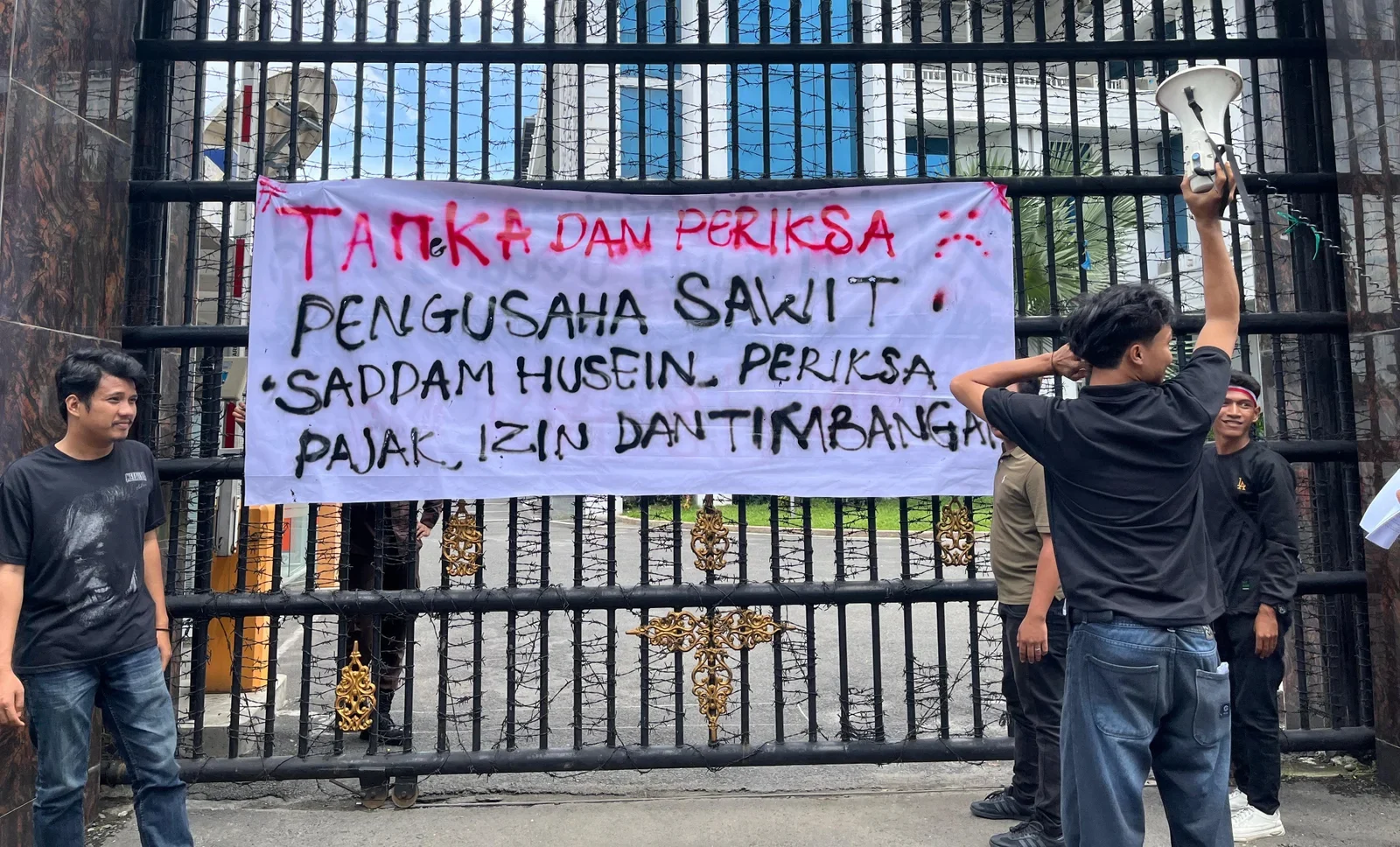
The North Sumatra Student Aspiration Forum (FAMSU) has officially called upon the North Sumatra High Prosecutor’s Office (Kejati Sumut) to launch a thorough investigation into the palm oil business operations linked to local entrepreneur Saddam Husein Siregar, located in Sigama Village, Padang Bolak District, North Padang Lawas Regency (Paluta).
FAMSU demanded that law enforcement officials probe every suspected violation and enforce strict legal action, particularly regarding business legality, tax obligations, operational permits, environmental compliance, and palm oil weighing practices.
Among the key concerns highlighted by FAMSU is the business’s Trade Business Permit (SITU) or relevant approval documents, including public approval or objections from neighboring communities regarding heavy truck traffic and palm transportation that could negatively impact local residents.
Furthermore, FAMSU urged authorities to inspect the Spatial Utilization Activity Conformity (KKPR) to ensure that the business location and activities strictly align with regional spatial planning regulations.
The student group also pressed officials to evaluate environmental permits, including the SPPL (Environmental Management Statement) or UKL-UPL (Environmental Management and Monitoring Measures), tailored to the scale of operations. This check is deemed critical as loading and unloading, waste management, and loose palm fruit (brondolan) handling pose potential environmental risks if not properly managed.
Beyond licensing, FAMSU demanded a comprehensive audit into the legality of the corporate entity, tax payments, operational documentation, and the weighing scale systems used in transactions. Ensuring scale calibration and transparency is crucial to prevent unfair practices that could financially disadvantage local farmers and trade partners.
“We emphasize that Kejati Sumut must not merely look at the operational surface. They must thoroughly inspect the legality, tax obligations, licensing, environmental documentation, and the weighing scale apparatus utilized,” FAMSU declared in a statement.
“We urge law enforcement authorities to arrest, prosecute, and firmly sanction the responsible parties in accordance with the law. There must be zero tolerance for alleged violations within palm oil business activities in Paluta,” the group asserted.
FAMSU expressed hope that Kejati Sumut will conduct a professional, transparent, and objective investigation into all issues raised by the public.
The demands raised by student activists reflect a growing broader initiative across North Sumatra to regulate independent palm oil collection centers (locally known as ram) and intermediate traders. Unregistered collection points frequently operate in regulatory gray areas, creating challenges related to local tax revenue leakage, environmental degradation from untreated agricultural waste, and infrastructure damage caused by overloaded palm transport trucks.
The scrutiny over certified weighing bridges (timbangan sawit) addresses a long-standing grievance among smallholder palm oil farmers in regional North Sumatra. Uncalibrated or manipulated weighing equipment directly diminishes farmers’ profit margins by artificially deflating fruit weight measurements. Strict enforcement by law enforcement and the local Department of Industry and Trade (Disperindag) ensures fair market practices, protecting smallholders while strengthening local tax compliance mechanisms.