

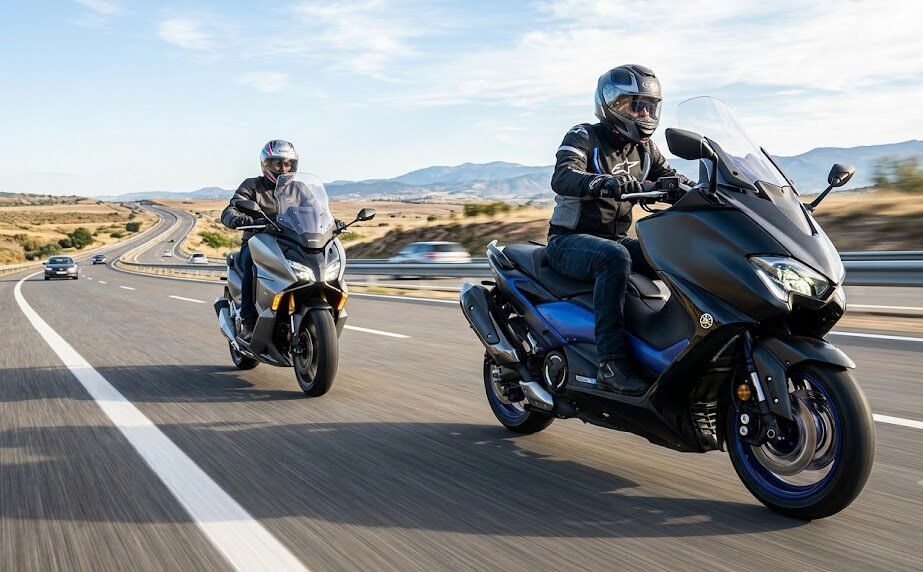
The humble automatic scooter carried a specific reputation. It was the nimble, unpretentious champion of city streets, perfect for weaving through gridlocked traffic, running quick errands, and squeezing into parking spots that regular cars could only dream about.
But the second you merged onto a open highway, reality hit. Small single-cylinder engines would scream at maximum RPMs, handles would vibrate uncontrollably, and passing a heavy commercial truck felt like taking a leap of faith.
That narrative is rapidly dissolving in the rearview mirror. Across global riding communities, a quiet revolution is happening on the fast lane as twin-cylinder automatic scooters capture the spotlight.
Riders looking for the relaxed, twist-and-go simplicity of an automatic drive system no longer have to compromise on high-speed capability, stability, or long-distance touring comfort.
So, why are these multi-cylinder, high-capacity twist-and-go machines suddenly becoming the ultimate choice for daily commuters and weekend tourers alike? It turns out that splitting the engine displacement across two cylinders changes everything about how a scooter behaves at speed.
To understand the sudden surge in enthusiasm, one has to look closely at the inherent mechanics of traditional scooters. Single-cylinder engines—often referred to as “thumpers”—are engineering marvels of efficiency and low-end torque. They work brilliantly at low to moderate speeds, making them perfect for urban environments. However, as speed increases and engine revolutions climb, a single large piston pumping up and down creates noticeable primary vibrations that resonate directly through the handlebars and floorboards.
By introducing a twin-cylinder layout, manufacturers effectively double the pulse rate while halving the reciprocal weight of each individual piston. The mechanical result is an exceptionally smooth power delivery that feels refined rather than stressed. Instead of buzzing continuously at high speeds, a twin-cylinder engine purrs along, offering a massive power buffer that makes highway cruising feel practically effortless.
Beyond sheer engine smoothness, power delivery on a twin-cylinder automatic changes the psychological dynamic of riding on high-speed expressways. Merging onto a fast-moving highway requires rapid acceleration to match the flow of traffic quickly and safely. Twin-cylinder maxis deliver a broad, linear torque curve that pulls strongly from midrange speeds all the way to triple-digit limits without requiring a single manual gear shift.
This seamless acceleration completely eliminates the stress of finding the right gear when overtaking at 70 mph. Riders simply twist the throttle, and the continuously variable transmission (CVT) or dual-clutch transmission (DCT) pairs instantly with the engine’s torque to launch the machine forward. Passing long tractor-trailers or accelerating out of tight situations becomes a smooth, predictable maneuver rather than a high-rpm struggle.
It is not just about engine power, though; the physical chassis architecture of these twin-cylinder automatics plays a massive role in their sudden highway dominance. To accommodate two cylinders, manufacturers design robust, motorcycle-style frames that mount the heavy engine rigidly within the chassis rather than on the rear swingarm. This structural evolution dramatically lowers the center of gravity and improves overall weight distribution.
Pair that balanced geometry with larger wheel diameters, dual front disc brakes, and sophisticated long-travel suspension, and you get a vehicle that rides with the rock-solid stability of a sport-touring motorcycle. Wind buffeting from passing vehicles no longer unsettles the chassis, and long sweeping turns on interstate highways feel planted, precise, and completely composed.
Interestingly, this rise in twin-cylinder popularity is also being driven by a demographic shift among modern motorcycle buyers. Experienced long-distance riders who are tired of heavy clutch levers in stop-and-go traffic are discovering that they do not have to give up performance to enjoy automatic convenience. Meanwhile, younger commuters upgrading from smaller city scooters are demanding machines that can handle full weekend road trips without needing a trailer.
Furthermore, the practical benefits of the scooter form factor remain fully intact. Riders still enjoy generous under-seat storage capable of holding full-face helmets or weekend luggage, extensive weather protection from wide front fairings, and upright, ergonomic riding positions that reduce physical fatigue. You get the highway capabilities of a middleweight touring bike wrapped in a package that is as easy to ride as a suburban moped.
As motorcycle manufacturers continue to invest heavily in advanced electronic driver aids, twin-cylinder maxis are receiving top-tier technology once reserved exclusively for flagship adventure bikes. Multi-level traction control, cornering ABS, adjustable electronic windscreens, integrated navigation displays, and customizable ride modes are quickly becoming standard equipment on these long-legged commuters.
Ultimately, the steady rise of twin-cylinder automatic scooters reflects a broader shift in modern personal mobility: riders want maximum performance with minimum friction. By blending high-speed engine refinement with the effortless nature of an automatic drive, these impressive machines are proving that you do not need a clutch lever to conquer the open road.